Reader searches "9 online games" with no context
Typed into a search bar with no other words attached, "9 online games" is genuinely ambiguous — the query itself doesn't tell you which product you mean, and at least three unrelated games answer to it. There's a billiards variant called 9 Ball Pool, a card game sold as an app under the name Nine Card Game, and a browser puzzle where numbered tiles are merged toward nine. None of these share rules, none share a platform, and none is more "correct" than the others — the number is just short enough to get reused.
The fastest way to sort them is by what you expect to see on screen:
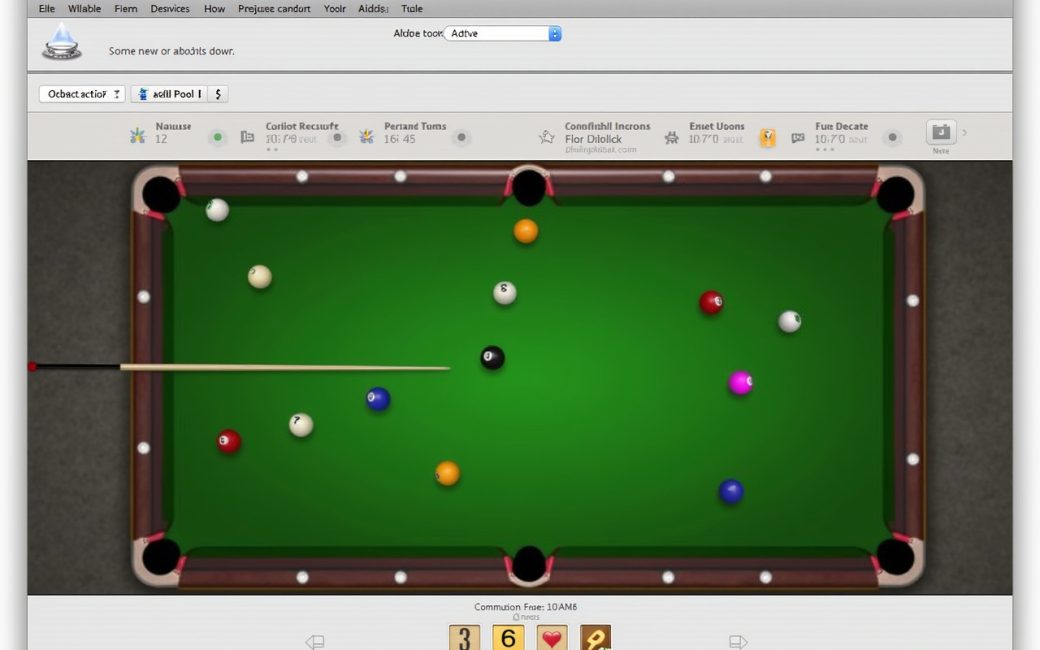
- A pool table with cue and numbered balls — you want 9 Ball Pool.
- A hand of playing cards being dealt — you want the Nine Card Game.
- Numbered tiles sliding and combining — you want the number puzzle called 9.
Once you know which of the three you mean, go straight to that game type rather than clicking through a general portal and hoping it surfaces the right one. Large freeware and free-game catalogues carry hundreds of small titles under overlapping, generic names, which is exactly why a one-character search term like "9" resolves to unrelated products instead of one obvious answer.
Reader wants to play 9 ball without installing anything
If what you want is the pool game, you can play it straight in a browser with no download and no account. Browser-hosted casual games are typically instant-play by design — the page loads the game engine directly and nothing installs to your device, which is the same no-install model that portals such as Addicting Games run their entire library on.
"Free" in this context usually means no purchase is required to start or finish a session — you don't need a credit card, a subscription, or an account just to hit the balls. Some browser portals carry ads around the game window instead of charging a price, and some ask for an optional sign-in to save stats; neither is required to play. Getting a game for free without paying, in practice, just means picking a portal and opening the title directly rather than searching for a "full version" or a download that promises more.
Getting into the browser window is the easy part. Winning takes actual rule knowledge:
- The break shot starts the rack; whoever pockets a ball legally on the break continues shooting.
- Every shot after that must contact the lowest-numbered ball remaining on the table first with the cue ball.
- As long as the cue ball hits that lowest ball first, any ball can legally drop into a pocket — sinking a higher-numbered ball out of sequence is not a foul by itself.
- A foul only occurs if the cue ball fails to contact the lowest ball first, or if no ball is driven to a rail or pocket after contact; a foul passes the turn to the opponent.
- The game ends when the 9 ball is legally pocketed — whoever pockets it wins, regardless of how many other balls are left on the table.
That last rule is what separates 9 ball from straight pool: you don't need to clear the table, you need to control the sequence that lets you legally reach the nine while contacting the lowest ball first on every turn.
Reader has no reliable internet or wants to play on a phone
A browser portal needs a live connection every time you open it, since the page and game assets load from the server on each visit. That single fact should drive the choice more than anything else.
| Need | Best fit | Why |
|---|---|---|
| Play instantly, no install, occasional Wi-Fi | Browser pool portal | Loads on demand, nothing stored locally |
| Play across multiple devices without reinstalling | Browser portal | State lives on the site, not the device |
| Avoid repeated data use over a session | App downloaded once | Assets are stored after the first download |
| Prefer touch controls over mouse aiming | Depends on the specific app or site | Interfaces vary by title, not by category |
If a card game or puzzle app you're considering claims to work without a connection, that's a feature of that specific app's listing, not something true of the category generally — check the app's own description before relying on it, since browser portals as a rule do not offer that option. If storage space or set-up friction is the constraint, stay in the browser and accept that you'll need a connection each time.
Reader is choosing a game for a child
The safest move is to use a catalogue that is actually built and moderated for children, not a general games portal that happens to include some kid-friendly titles alongside everything else. General portals mix age ratings, ad load, and monetisation tactics across their entire library, so a title's presence there says nothing about whether it was designed with a young player in mind. A dedicated kids' section, by contrast, has usually been filtered for content, difficulty, and ad behaviour before it's published, which is the actual difference worth looking for — not the branding on the homepage.
Practically, that means checking for a section explicitly labeled by age range or "kids," rather than trusting genre tags like "puzzle" or "casual," which get applied to adult-oriented games just as often. If a site doesn't separate its catalogue this way at all, treat every title on it as unvetted for a child and check the individual game's rating and monetisation model yourself before handing over the device.
Once you know which of the three "9" games you're actually after, whether you need offline access, and whether the game is truly free to open or just ad-supported, the next step is simple: open the matching catalogue — a pool portal, an app store listing for the card game, or an age-filtered kids' section — and start from there instead of a generic search.